· Saunaline
Finnish sauna, infrared or combi: which one belongs in your home?
Two different technologies, two different rituals: temperatures, warm-up times, running costs and space requirements compared, plus the combi option that avoids the choice.
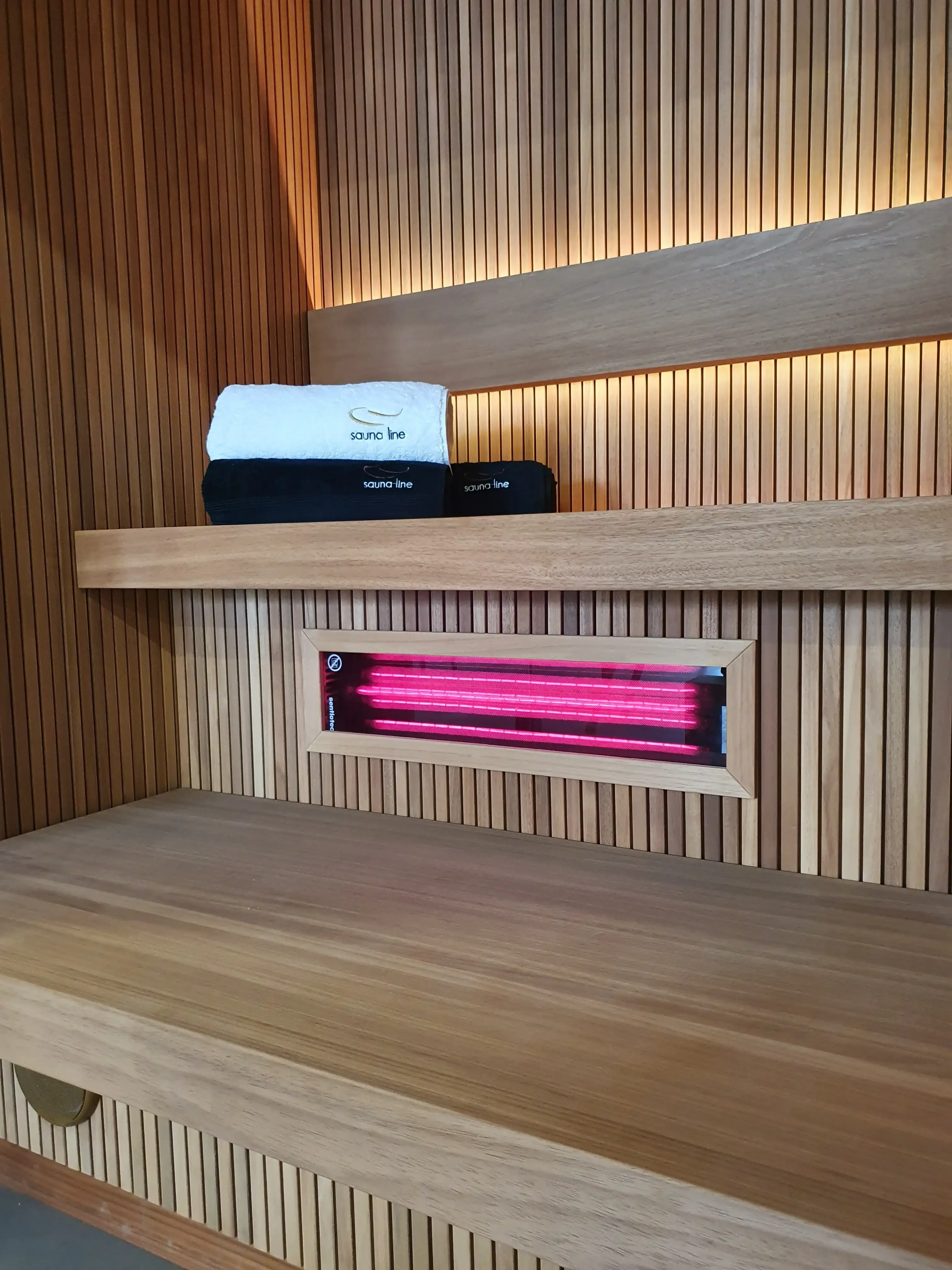
Neither technology is better; they answer different needs. A Finnish sauna heats air to 80 to 100 °C and gives you the full ritual: steam rising off hot stones, heat you feel in your breath, the cold plunge afterwards. An infrared cabin works at a gentle 45 to 60 °C, warms the body directly rather than the air, and is ready in fifteen minutes. If you cannot choose, you do not have to: a combi cabin carries both systems. This guide compares them honestly, including the numbers.
What is the actual difference between Finnish and infrared heat?
The physics differ, and everything else follows from that. A Finnish sauna warms the air with an electric heater and a mass of stones; your body heats up because the room is hot, and water poured over the stones produces the humid wave of steam that defines the ritual. An infrared cabin uses emitters that radiate heat directly onto the body, the way low winter sun warms your face while the air stays cool. The air in an infrared cabin never approaches sauna temperature, which is precisely the point.
From this follow the practical differences: temperature (80 to 100 °C against 45 to 60 °C), warm-up time (40 to 60 minutes against 10 to 15), session character (a structured ritual of rounds and cooling against a half-hour of steady warmth), and energy per session (about 10 to 13 kWh against 1 to 2 kWh).
What is a Finnish sauna best at?
The experience itself. If what draws you to a sauna is the proper heat, steam over stones, the alternation of hot rounds and cold water, and the social dimension of sitting together in a wooden room, only a Finnish sauna delivers it. In our cabins that means an EOS heater with a steam unit sized to the room’s volume, benches with a 28 mm backrest built for years of 90 °C cycles, and vertically-laid abachi that stays comfortable against the skin at full temperature. It is the sauna your grandparents would recognise, engineered properly.
It asks more in return: a dedicated 400 V circuit in most cases, planned ventilation, and the patience to heat the room before each session. The technical requirements guide covers what the room needs.
What is an infrared cabin best at?
Frequency and ease. Because it is ready in minutes and gentler on circulation, an infrared cabin fits daily use: a session after training, twenty minutes in the evening, use by people who find 90 °C air uncomfortable. It draws far less power (often a standard 230 V connection), needs less space, and its running cost per session is closer to the price of a coffee than a dinner.
What it does not do is the ritual. There is no steam, no löyly, no wave of heat when water hits stone. Marketing that sells infrared as “the same benefits with more comfort” flattens a real difference: it is a different experience, valuable on its own terms. Our Infrared Line uses full-spectrum emitters rather than single-wavelength panels, specified standalone or built alongside a classical cabin.
What about the health claims?
Both expose the body to heat, and regular heat exposure is the mechanism behind the benefits research points to: cardiovascular response, recovery, sleep. The honest version is that the two differ mainly in intensity and tolerability, not in some proprietary magic of one wavelength. If a vendor’s page reads like a medical journal, treat it with the same caution as one that promises nothing at all. Choose by how you will actually use the cabin: intense rounds a few times a week, or gentle warmth most days.
What do they cost to buy and run?
Purchase: standalone infrared cabins start well below classical saunas (from roughly 5,500 to 9,000 PLN ready-made in Poland; bespoke infrared builds cost more), while made-to-measure Finnish saunas from a premium manufacturer start from about 75,000 PLN, and a combi configuration adds the emitter system to that base. The full breakdown is in the cost guide.
Running: a Finnish session, heat-up included, is about 10 to 13 kWh, roughly 10 to 15 PLN at 2026 household rates. An infrared session is 1 to 2 kWh: one to two złoty. Neither will register meaningfully on an annual electricity bill at normal use; the eco mode on our controller keeps standby draw to a minimum in both.
Combi: when you do not have to choose
In a combi cabin, full-spectrum infrared emitters are built into the classical sauna, usually at one bench position, and both systems run from the same touch controller. The result is one room with two uses: the full Finnish ritual on the weekend, a fifteen-minute infrared session on a Tuesday evening without heating the whole cabin. For a bespoke build this is a configuration decision, not a compromise: the emitters are planned into the bench layout from the first drawing. Most of our commissions that begin as “Finnish or infrared?” end as combi.
Which one belongs in your home?
Choose Finnish if the ritual is the point: real heat, steam, contrast with cold, a room shared with others. Choose infrared if you will use it mostly alone, often, briefly, or if high temperatures are off the table for comfort or health reasons. Choose combi if both patterns describe your week and the room is being designed around the sauna anyway; at that point the marginal cost of the second system is small against the value of never having chosen wrong.
If the room exists and the question is what fits it, see how a commission works or ask us about your project; the completed projects include all three configurations.