· Saunaline
How to choose a manufacturer for a made-to-measure sauna
Seven questions to ask before commissioning a custom sauna: drawings, materials, heater selection, installation, service and what a quote should specify.
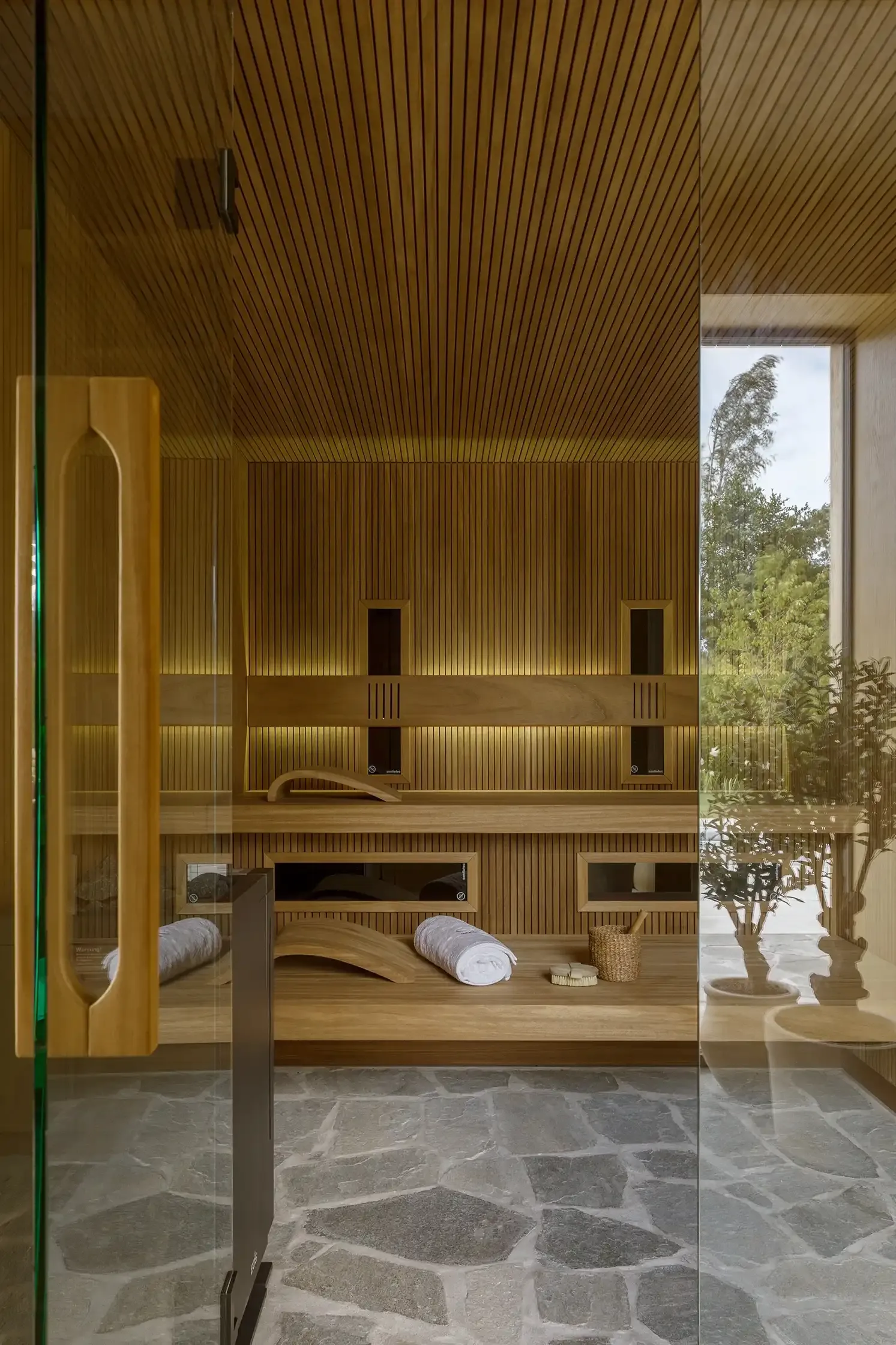
The right sauna manufacturer should be able to explain your room before trying to sell you a cabin. Ask for a measured design, a written specification and a clear account of who will build, install and service it. If those answers are missing, a beautiful rendering and a single total price tell you very little.
We design and build made-to-measure saunas, so this is a manufacturer’s view. The questions below are also the ones we would use if we were commissioning someone else. They help separate a serious proposal from an attractive image.
What should the manufacturer ask about your room?
Before recommending a line, wood or heater, a manufacturer should ask for a dimensioned plan, finished ceiling height, photographs and the location of doors, windows and existing services. They should also ask who will use the sauna, whether people need to lie down, how the sauna relates to the shower and what the architect intends the room to feel like.
An early conversation can start with approximate dimensions. Production cannot. Finished floor levels, wall build-ups, slopes and the door swing affect the cabin that can actually be installed. Someone who quotes a final design from an area in square metres has not resolved those decisions.
What drawings should you see before production?
You should see a dimensioned plan and elevations that locate the benches, heater, door, glazing, controls and lighting. The drawings should also identify the service points and the clearances required by the selected equipment. They give your architect, electrician and manufacturer one agreed version of the room.
Ask when the site is measured and who signs off the final drawings. Ask what happens if the finished dimensions differ from the original plan. A perspective rendering can show the appearance; it cannot settle a 30 mm clash at a doorway. For the wider room preparation, our home sauna requirements guide covers space, ventilation and power.
How specific should the material and equipment list be?
Specific enough that another person can identify what will be installed. The quote should name the wood used on the walls and on the benches, the glass type and thickness, the heater model and power, the controls, lighting and visible hardware. “Premium timber” and “high-quality stove” are descriptions, not specifications.
The best material is not the most expensive material everywhere. Benches, for example, are touched by bare skin; cladding has a different job. Ask why a particular wood has been chosen for each surface and how it will age under heat and cleaning. Our materials guide shows how we make those choices, including abachi, hemlock and glass options.
Who is responsible for ventilation and electrical coordination?
The manufacturer should provide equipment requirements and locations early enough for the project team to use them. A qualified electrician designs and connects the electrical installation; the room designer and ventilation specialist must coordinate supply and extract air. The manufacturer’s job is to explain what the selected sauna and heater require, review interfaces and flag conflicts before the walls close.
Ask for the exact heater documentation, not an assurance that “a 400 V supply will be enough.” Cable routes, protective devices, sensor positions and safety distances depend on the actual equipment and the rules where it is installed. If several firms are involved, write down who supplies each part of the information and who approves it.
Who builds, installs and services the sauna?
There is no single correct business model, but you should know the chain of responsibility. Does the firm you speak to manufacture the cabin or order it elsewhere? Who measures the site? Who installs it? If a glass pane, control or heater needs attention in five years, who receives the call and who can obtain the part?
Ask which parts are covered by which warranty, whether travel for service is included and what access is needed to remove the heater or reach the controls. These questions matter most when the sauna is built into a finished interior: replacing a component should not mean dismantling the room.
How do you compare two sauna quotes fairly?
Put the proposals side by side by scope, not just by their totals. Check these items in writing:
- Design, site measurement and approval drawings.
- Cabin dimensions, wall and bench materials, glazing and door hardware.
- Heater model, controls, lighting and any infrared or steam equipment.
- Ventilation interfaces and the boundary of the electrical work.
- Delivery, installation, commissioning and handover.
- Warranty, service contact, exclusions and work expected from other trades.
If one quote is substantially lower, ask which of these items is absent or different. The gap may be entirely reasonable. It should be visible before the order is signed. Our price guide explains the main cost drivers; the custom-versus-ready-made comparison addresses a different decision: which type of product suits the room in the first place.
What is a useful first conversation?
Send a plan, a few photographs and your intended timetable. Tell the manufacturer whether an architect is already involved and what is fixed: the finished room, an existing electrical supply, a particular glass frontage or a date the building must be ready. Ask what can be confirmed now and what needs a site measure.
At Saunaline, a made-to-measure commission starts from approximately EUR 17,500. That places us in a specific part of the market. We draw each cabin for its room, build it in Krosno and install it with our team. If that approach fits your project, send us the room plan. We can begin with the questions the room raises, before discussing finishes.